
The short answer: Protect your ornamental iron fence from rust by inspecting it twice a year, touching up scratches immediately, applying a rust-inhibiting primer to bare metal, and keeping the finish intact with powder coating or quality paint. If rust has already appeared, remove it with a wire brush, treat with a rust converter, and repaint. Annual maintenance costs under 50 and prevents 500–$2,000+ in fence replacement.
Here’s the thing most people don’t realize: rust never sleeps. It starts as a tiny scratch, a chip in the coating, or a spot where moisture collects. Left untreated, it spreads beneath the surface eating through the metal from the inside out until the fence is structurally compromised.
Let’s be honest most homeowners ignore their iron fence until they see orange spots. By then, the rust has been working for months. The regret? A fence that should have lasted 50 years needs replacement in 15.
This guide walks you through exactly how to protect your ornamental iron fence from rust prevention, treatment, and long-term maintenance so you can keep it beautiful for generations.
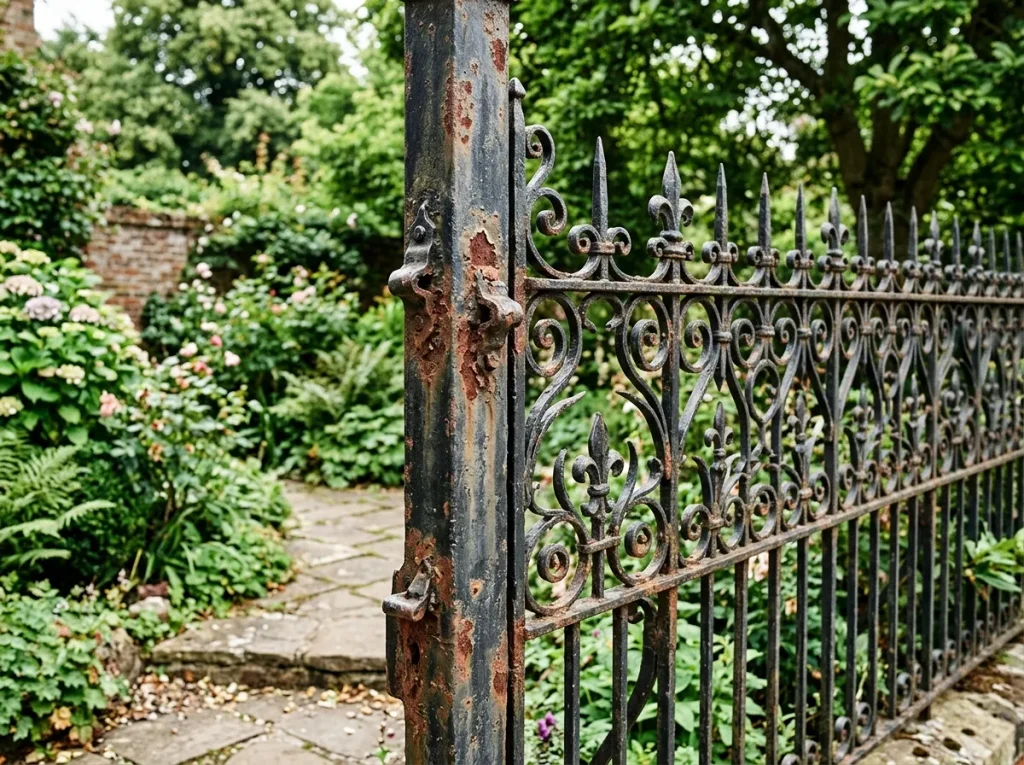
Key Takeaways / Quick Summary
- Inspect twice a year: Look for scratches, chips, and rust spots especially at joints and ground level
- Act immediately: Touch up scratches the day you notice them rust starts within hours
- Remove rust properly: Wire brush, rust converter, primer, then paint
- Powder coating is best: It’s more durable than paint and lasts 10–20 years
- Keep water away: Improve drainage and avoid soil contact
- Annual cost: Under $50 in supplies for most homeowners
- Lifespan extension: Regular maintenance adds 10–20 years to your fence’s life
- When to call a pro: Large rust areas, structural damage, or if you’re not comfortable with DIY
Why Ornamental Iron Fences Rust
Rust is iron oxide the result of a chemical reaction between iron, oxygen, and water. Ornamental iron fences are typically made from mild steel, which contains iron. Without protection, steel will rust.
The three conditions rust needs:
- Iron (present in steel)
- Oxygen (present in air)
- Moisture (rain, humidity, sprinklers, dew)
Remove any one of these, and rust can’t form. Since you can’t remove the iron or the air, your focus must be on blocking moisture and maintaining the protective coating.
Where rust starts:
- Scratches and chips: Any break in the coating exposes bare metal
- Joints and welds: These areas trap moisture and are often poorly coated
- Ground level: Soil and vegetation hold moisture against the metal
- Horizontal surfaces: Water pools on flat rails and post caps
- Areas with poor drainage: Water sits at the base of posts
If you live in a humid or coastal area, rust risk is significantly higher. Salt air accelerates corrosion. You’ll need to inspect more frequently and consider additional protective measures.
Step 1: Inspect Your Fence Twice a Year
Prevention starts with inspection. Set a reminder for spring and fall or after any major storm.
What to look for:
- Scratches, chips, or cracks in the paint or powder coating
- Orange or brown spots early signs of rust
- Bubbling or peeling paint rust underneath pushing the coating up
- Rust at joints where pickets meet rails or where the fence meets posts
- Ground-level rust where the fence contacts soil or vegetation
- Water pooling check for areas where water sits after rain
Tools you’ll need:
- Flashlight
- Screwdriver or awl (to probe for soft spots)
- Notepad or phone (to document problem areas)
If you find rust, treat it immediately don’t wait for the next inspection.

Step 2: Treat Existing Rust
If you catch rust early, you can stop it before it spreads. Here’s the step-by-step process.
For Light Surface Rust
What you need:
- Wire brush or sandpaper (80–120 grit)
- Rust converter (optional but recommended)
- Rust-inhibiting primer
- Matching paint (or powder coat touch-up)
Steps:
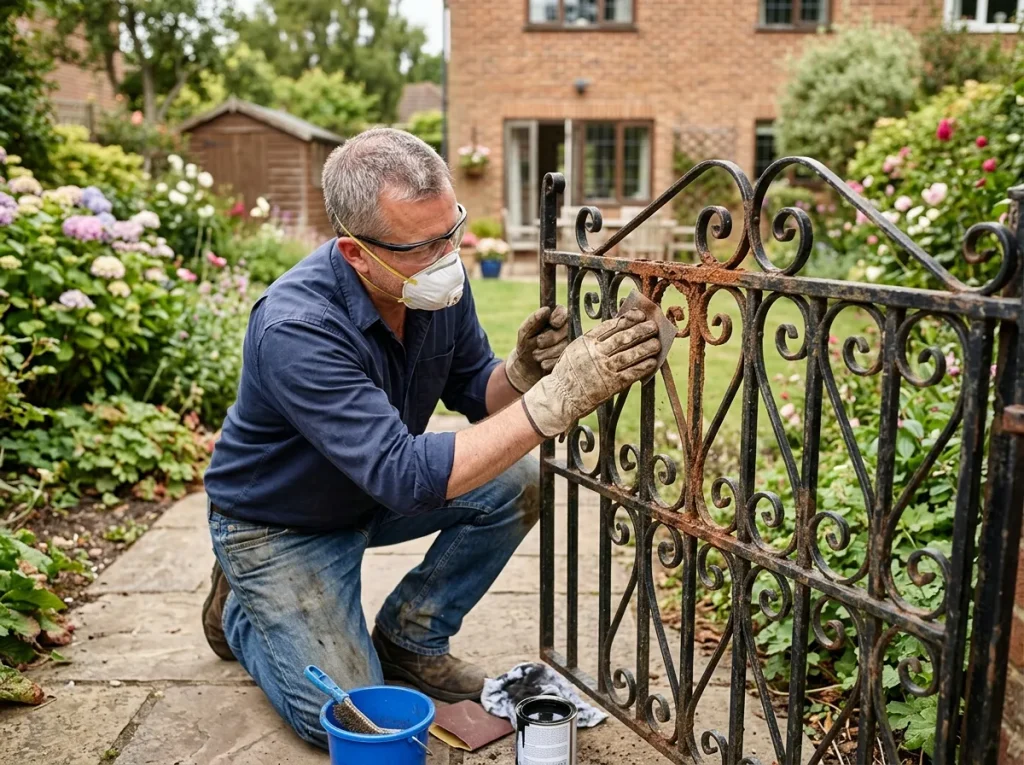
- Remove the rust. Use a wire brush or sandpaper to scrub the rust down to bare metal. Remove all visible rust if you leave any behind, it will come back.
- Clean the area. Wipe away dust and debris with a clean cloth.
- Apply rust converter (optional). A rust converter chemically converts remaining rust into a stable, paintable surface. It’s a good extra layer of protection.
- Apply rust-inhibiting primer. This primer contains zinc or other corrosion inhibitors that prevent rust from returning. Apply a thin, even coat and let it dry according to the manufacturer’s instructions.
- Apply matching paint. Once the primer is dry, apply a topcoat of matching paint. For powder-coated fences, use a touch-up paint specifically designed for powder coat.
- Let it cure. Allow the paint to cure fully usually 24–48 hours before exposing it to moisture.
For Heavy Rust or Pitting
If the rust has been there for a while, it may have pitted the metal. The process is the same, but you’ll need to be more aggressive with removal.
- Use a wire wheel on a drill for faster removal.
- Sand down to bare metal. Any remaining rust will continue to spread.
- Consider a rust converter it’s more important for pitted areas.
- Apply multiple thin coats of primer and paint, rather than one thick coat.
If the rust has compromised the metal’s structural integrity (holes, deep pitting, weakened sections), it’s time to call a professional. Repair may involve welding or replacing sections.

Step 3: Prevent Future Rust
Treatment is only half the battle. You also need to prevent rust from returning.
Maintain the Finish
The coating on your fence is its first line of defense. Protect it.
- Touch up scratches immediately. Keep matching touch-up paint on hand.
- Reapply powder coating or paint every 5–10 years, depending on wear.
- Avoid abrasive cleaners. They can scratch the coating.
- Clean with mild soap and water not harsh chemicals.
Improve Drainage
Water is the enemy. Keep it away from your fence.
- Ensure the ground slopes away from the fence line.
- Add gravel at the base of posts to improve drainage.
- Keep vegetation trimmed back at least 2 feet.
- Avoid sprinklers hitting the fence adjust heads or redirect spray.
Consider Additional Protection
- Hot-dip galvanizing: The ultimate rust protection, but it changes the appearance.
- Powder coating: More durable than paint, available in any color.
- Clear sealant: Some products provide an extra layer of protection without changing the appearance.
If you’re in a coastal area, consider powder-coated aluminum instead of steel. Aluminum doesn’t rust it forms a protective oxide layer instead.
Rust Protection Methods Comparison
| Method | Cost | Durability | Best For | DIY-Friendly? |
| Touch-up Paint | 10–30 | 1–2 years | Small scratches | ✅ Yes |
| Rust-Inhibiting Primer + Paint | 30–80 | 3–5 years | Moderate rust | ✅ Yes |
| Powder Coating | 200–800 | 10–20 years | Full fence restoration | ❌ No |
| Hot-Dip Galvanizing | 500–1,500+ | 20–50 years | Coastal areas, extreme protection | ❌ No |
| Clear Sealant | 20–50 | 1–2 years | Added protection | ✅ Yes |
Sources: HomeGuide, Angi, American Galvanizers Association (2026)
Rust Treatment Cost Comparison
| Treatment | DIY Cost | Professional Cost | Time Required |
| Small Spot Treatment | 10–30 | 100–200 | 1–2 hours |
| Section Treatment | 30–80 | 200–500 | 3–5 hours |
| Full Fence Repainting | 100–300 | 500–1,500 | 1–2 days |
| Powder Coating | — | 200–800 | 1–2 weeks |
| Rusted Section Replacement | — | 300–1,000+ | 2–5 days |
Ornamental Iron Fence Lifespan by Maintenance Level
| Maintenance Level | Typical Lifespan | Annual Cost |
| Neglected (no maintenance) | 10–15 years | $0 |
| Basic (occasional touch-ups) | 20–30 years | 20–50 |
| Comprehensive (annual inspection + treatment) | 40–50+ years | 50–100 |
| Professional maintenance | 50+ years | 150–400 |
Sources: Industry data, National Ornamental & Miscellaneous Metals Association (NOMMA) (2026)
Statistical Anchors
According to the American Galvanizers Association, corrosion costs the U.S. economy over $500 billion annually and proper coating maintenance is the most effective way to extend the life of steel structures.
According to NACE International (now AMPP), rust can begin forming on unprotected steel within hours of exposure to moisture and oxygen. Prompt touch-up of scratches is critical.
According to industry data, ornamental iron fences with regular maintenance last 40–50+ years, while neglected fences may need replacement in 10–15 years. The difference is maintenance.
According to the National Association of Corrosion Engineers, a single scratch in a protective coating can lead to rust spreading beneath the surface at a rate of 1–2 inches per year if left untreated.
The Regrets Homeowners Mention Most
Mistake 1: Ignoring small scratches.
“It was just a tiny scratch I didn’t think it mattered.” But rust starts within hours. By the time the homeowner noticed, the rust had spread beneath the coating. The regret? A 500repaintingjob instead of a 10 touch-up.
Mistake 2: Painting over rust without removing it.
“I just painted over the rust spot.” But rust spreads under paint. The regret? Bubbling, peeling paint and a rust problem that got worse.
Mistake 3: Skipping the primer.
“I used paint directly on the bare metal.” But paint alone doesn’t inhibit rust. The regret? Rust returning within a year.
Mistake 4: Letting vegetation grow against the fence.
“I liked the way the ivy looked.” But the ivy trapped moisture against the metal. The regret? Rust at the base of every post.
Mistake 5: Not improving drainage.
“I didn’t think about where the water went.” But water pooled at the base of the fence, accelerating rust. The regret? Replacing posts that should have lasted decades.
Mistake 6: Waiting too long to treat rust.
“I’ll get to it next spring.” But rust doesn’t wait. The regret? A fence that needed full replacement instead of a simple touch-up.
Your Rust Protection Checklist
Spring Inspection
- □ Walk the entire fence line
- □ Look for scratches, chips, and rust spots
- □ Check joints and welds
- □ Inspect ground level for moisture and rust
- □ Clean the fence with mild soap and water
Fall Inspection
- □ Repeat spring inspection
- □ Touch up any scratches found during summer
- □ Check drainage around posts
- □ Trim vegetation back 2 feet
- □ Apply touch-up paint where needed
After Storms
- □ Inspect for new damage
- □ Touch up any scratches immediately
- □ Check for water pooling
- □ Remove debris from fence line
Annual Maintenance
- □ Deep clean the fence
- □ Treat any rust spots
- □ Reapply primer and paint where needed
- □ Check and adjust sprinklers
- □ Consider professional inspection every 2–3 years
Common Questions We Get Asked
How do I prevent rust on my ornamental iron fence?
Inspect twice a year, touch up scratches immediately, apply rust-inhibiting primer to bare metal, and keep the finish intact with powder coating or quality paint. Improve drainage and keep vegetation away from the fence.
What causes rust on ornamental iron fences?
Rust forms when iron, oxygen, and moisture meet. Scratches, chips, and areas where water collects are the most common starting points. Humid and coastal areas accelerate rust.
Can I paint over rust on my iron fence?
No. You must remove the rust first with a wire brush or sandpaper then apply a rust-inhibiting primer before painting. Painting over rust traps moisture and makes the problem worse.
What’s the best paint for an iron fence?
A rust-inhibiting primer followed by a high-quality exterior metal paint. For powder-coated fences, use touch-up paint specifically designed for powder coat. Powder coating itself is more durable than paint.
How often should I inspect my iron fence for rust?
Twice a year spring and fall and after any major storm. Coastal areas may require more frequent inspections.
How much does it cost to fix rust on an iron fence?
Small spot treatment costs 10–30 DIY or 100–200 professional. Full fence repainting runs 100–300 DIY or 500–1,500 professional. Powder coating costs 200–800.
Can rust be repaired, or does the fence need replacement?
Light surface rust can be treated and painted. Heavy rust that has compromised the metal’s structural integrity may require welding or section replacement. If the fence is severely rusted, replacement may be more cost-effective.
Does powder coating prevent rust?
Powder coating provides excellent rust protection better than paint and lasts 10–20 years. However, if the coating is scratched or chipped, rust can still form. Touch up damage immediately.
What’s the best way to remove rust from an iron fence?
Use a wire brush or sandpaper to remove rust down to bare metal. For heavier rust, use a wire wheel on a drill. Then apply a rust converter, primer, and paint.
How long does an ornamental iron fence last with proper maintenance?
With regular maintenance, an ornamental iron fence lasts 40–50+ years. Neglected fences may need replacement in 10–15 years.
Ready to Protect Your Ornamental Iron Fence?
Your ornamental iron fence is an investment. With a little routine care, it will last for generations but rust never takes a day off. The key is catching it early and treating it properly.
Here’s the bottom line: inspect twice a year, touch up scratches immediately, and never paint over rust. A $10 can of touch-up paint today prevents a $1,000 repair tomorrow.
What you should do next:
- Inspect your fence this weekend look for scratches, chips, and rust
- Gather supplies wire brush, primer, matching paint
- Treat any rust you find using the steps in this guide
- Improve drainage and trim vegetation
- Set reminders for spring and fall inspections
👉 Contact us for a professional ornamental iron fence inspection if you’re unsure about the condition of your fence or need help with rust treatment and restoration. Visit britlinfence.com/ornamental-iron/ for more information or to schedule service.
Get Your Free Ornamental Iron Fence Assessment →
